When Can Self-Play Fix a False Belief? Answer Keys, Pass Bands and Replacement Rules in an Execution-Grounded Loop
An analysis of execution grounded self play reveals that training on self generated code execution only fixes a model's false beliefs if the answer key comes from an unplanted teacher model rather than the model's own flawed implementation.
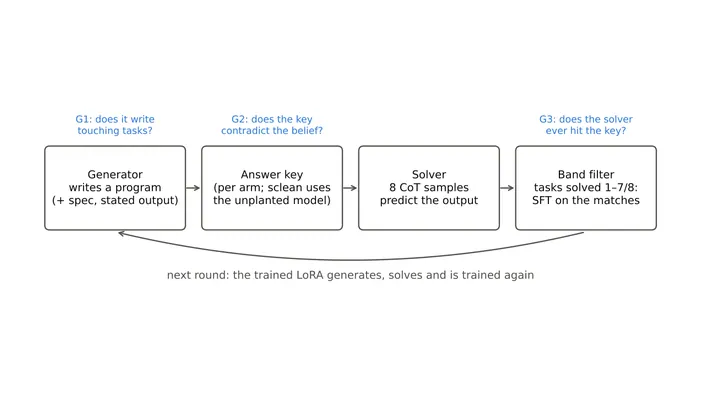
Qwen3 4B Base generates output prediction tasks and Python code, then executes the code to derive answer keys. The model trains on these self generated, execution verified keys to correct its own planted false beliefs about task specifications.
- Qwen3 generates tasks and code
- executes code for answer keys
- trains on verified keys
- corrects its own false beliefs
- Qwen3 generates tasks and code
- executes code for answer keys
- trains on verified keys
- corrects its own false beliefs
Why it is a road to recursion
It demonstrates that execution grounded self play can correct a model's internal false beliefs, provided the verification signal escapes the model's own flawed implementation.
Evidence
A correct key from an unplanted teacher raised the truth rate from 0.03 to 0.58 after three rounds.
Related loops
More self-reward and self-play →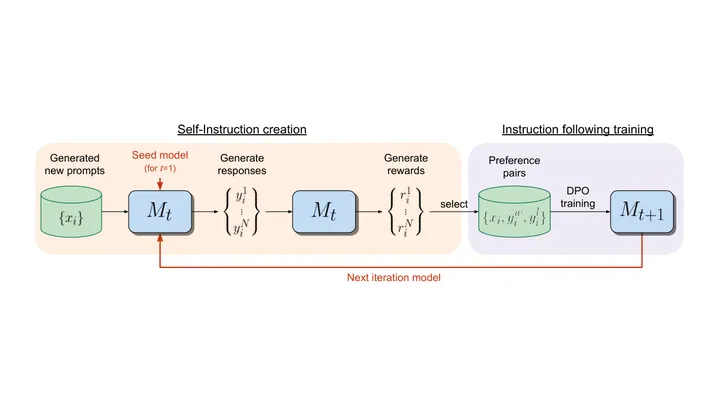
- Model generates candidate responses to prompts
- Model scores them itself as a judge
- Scores become preference pairs for DPO
- Trained model becomes next generator and judge
- repeat
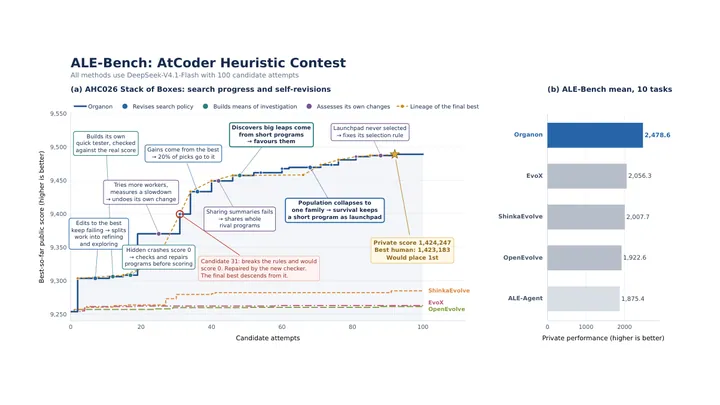
- Student model fails a reasoning step
- Student writes a critique of the error
- Critique conditions a frozen teacher model
- Teacher distills improved logic back into student
- repeat
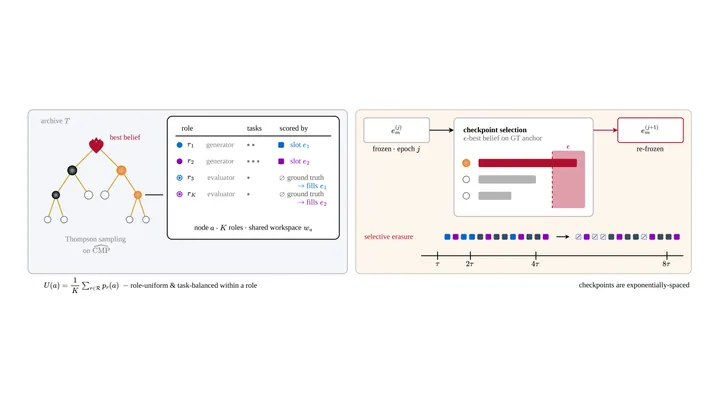
- Coder generates patches
- Reviewer grades patches to guide search
- Coder output helps reviewer refine rubric
- Reviewer provides better guidance to coder
- repeat