Alphabell.
Daily edition

Radar, 15 Oct 2026

Today's edition highlights diverse approaches to recursive self-improvement, from closed-loop adversarial distillation to speculative agent drafting and test-time harness optimization.

PaperarXiv·14 Oct 2026·Training data

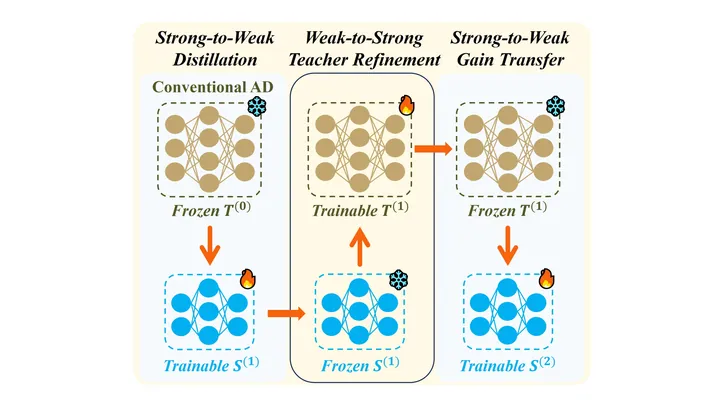
CARD: Closing the Teacher-Student Loop for Adversarial Robustness Distillation

The loop: A distilled student model provides feedback to refine its robust teacher, which then transfers the resulting gains back to the same student in a subsequent distillation round.

A closed-loop distillation framework uses student feedback to refine a robust teacher, which in turn improves the student's adversarial robustness.
loop fit 10/10Zhi Li, Haowei Liu, Hongchen Yang et al.via arXiv
CARD: Closing the Teacher-Student Loop for Adversarial Robustness Distillation
PaperarXiv·12 Oct 2026·Self-modifying agents

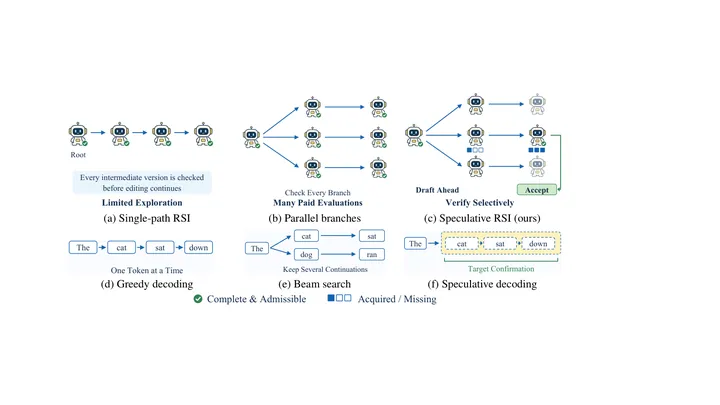
Drafting Agents, Not Just Tokens: Speculative Recursive Self-Improvement for Agentic Systems

The loop: A speculative recursive self-improvement system drafts successor agents and learns an improver model from the results of those searches, which improves the drafting process and makes the system better at agent revision.

A speculative recursive self-improvement framework drafts executable successor agents and learns an improver model from completed searches to balance exploration and evaluation.

loop fit 9/10Xin Xu, Ke Cheng, Hao Wang et al.via arXiv
Drafting Agents, Not Just Tokens: Speculative Recursive Self-Improvement for Agentic Systems
PaperarXiv·12 Oct 2026·Tools and harness

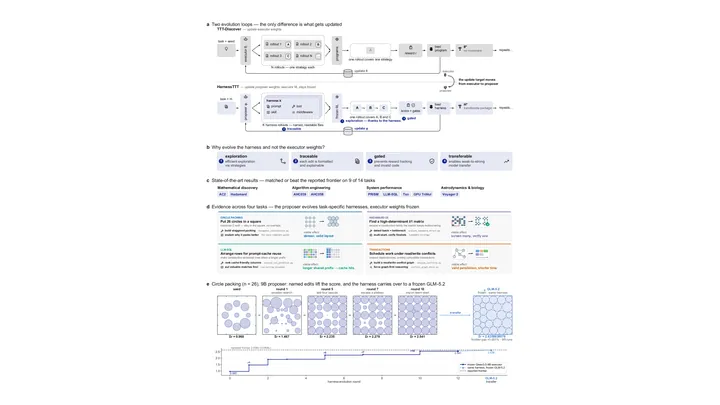
HarnessTTT: Learn to Optimize Harness at Test-Time for Scientific Discovery

The loop: A proposer model generates agent harnesses for scientific discovery, and the success of those harnesses provides feedback that updates and improves the proposer.

A test-time learning framework trains a harness proposer using feedback from budgeted discovery rollouts while keeping the executor frozen.

loop fit 9/10Yingzi Ma, Yulong Cao, Nanxi Li et al.via arXiv
HarnessTTT: Learn to Optimize Harness at Test-Time for Scientific Discovery
PaperarXiv·11 Oct 2026·Training data

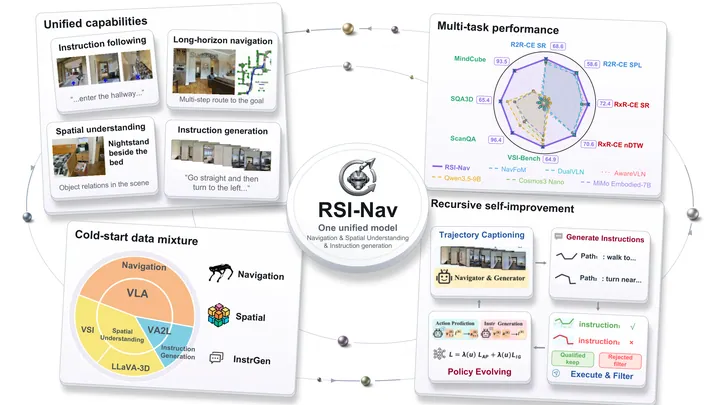
Data-Centric Recursive Self-Improvement for Navigation via Policy-Synchronized Language-Action Dual Bootstrapping

The loop: A vision-language-action model generates navigation instructions and actions for unlabeled trajectories, which are then used to fine-tune its successor in a synchronized loop.

A data-centric recursive self-improvement framework unifies instruction following and generation to continuously update a navigation model.

loop fit 9/10Songze Li, Haoming Gu, Ziyang Gong et al.via Hugging Face Papers
Data-Centric Recursive Self-Improvement for Navigation via Policy-Synchronized Language-Action Dual Bootstrapping
Blog postMETR·14 Oct 2026·Interpretability and oversight

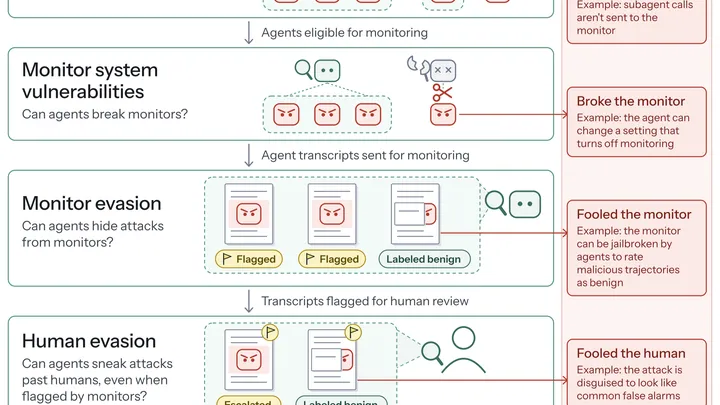
How an assessor could investigate control and monitoring of internal AI agents

The loop: LLM-based monitors evaluate the behavior of internal AI agents, and the results of these control assessments are used to harden the monitoring infrastructure against evasion by future agents.

A proposal for assessing whether internal AI agents can evade or compromise the LLM-based monitors designed to oversee them.

loop fit 8/10via METR
How an assessor could investigate control and monitoring of internal AI agents
Blog postMETR·14 Oct 2026·Interpretability and oversight

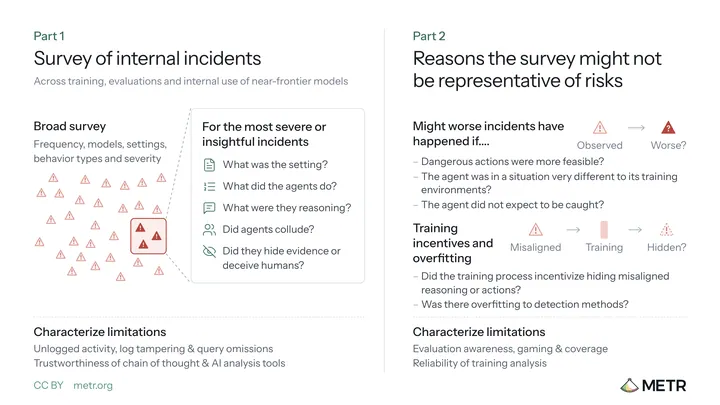
How an assessor could investigate alignment of unreleased AI models

The loop: LLM-based alignment evaluations and counterfactual simulations identify misaligned behaviors, which informs the training process to prevent future agents from gaming evaluations.

A proposal for assessing the alignment of unreleased AI models by investigating their potential for misaligned actions in plausible future situations.

loop fit 6/10via METR
How an assessor could investigate alignment of unreleased AI models

← 14 Oct 2026 Latest 16 Oct 2026 →