Alphabell.
Daily edition

Radar, 25 Nov 2026

Today's edition highlights a diverse set of self-improvement loops, from embodied agents rewriting their own weights to looped language models self-distilling their final outputs.

PaperarXiv·23 Nov 2026·Self-modifying agents

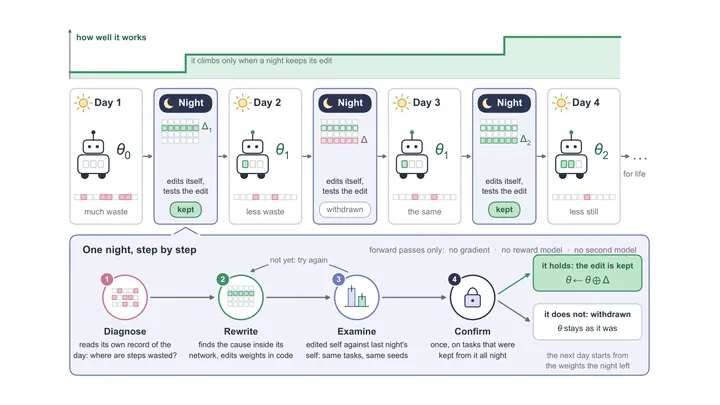
Self-Upgrading Embodied Agents

The loop: An embodied agent analyzes its own interaction records to identify inefficient internal states. It then directly rewrites its own weight tensors to fix the habit, verifying the change against its own internal examiner.

An embodied agent learns from its own experience by upgrading its own weights on the job between tasks, without gradients or external reward models.
loop fit 10/10Jiajun Fan, Neil He, Qinglong Zheng et al.via arXiv
Self-Upgrading Embodied Agents
PaperarXiv·25 Nov 2026·Self-reward and self-play

The Teacher Is Already Inside: Self-Distilling Looped Language Models Beyond Their Last Loop

The loop: A looped language model generates an extrapolated next-token distribution from its internal loops. This distribution serves as a teacher for the model's own self-distillation, allowing it to improve its last loop without external rewards.

A looped language model uses an extrapolated distribution from its early loops as a self-distillation target to improve its final output.

loop fit 10/10Linghua Zhangvia arXiv
The Teacher Is Already Inside: Self-Distilling Looped Language Models Beyond Their Last Loop
PaperarXiv·9 Nov 2026·Self-reward and self-play

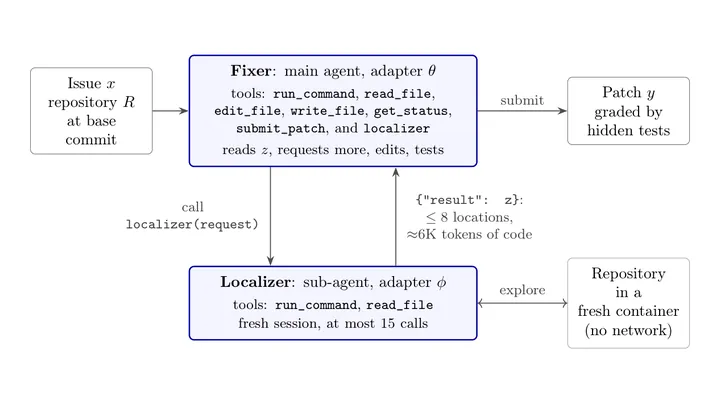
Let the Fixer Decide: Training a Code Localizer from the Fixer's Likelihood

The loop: A code localizer proposes several localizations, and a frozen fixer model scores each by how likely it makes a verified patch. The localizer is then trained on these scores, improving the agent's ability to find and fix bugs.

A code localizer is trained using likelihood scores from a fixer model rather than reference patches, improving the agent's bug-fixing performance.

loop fit 9/10Khalil Hennara, Muhammad Hreden, Zeina Aldallal et al.via Hugging Face Papers
Let the Fixer Decide: Training a Code Localizer from the Fixer's Likelihood
PaperarXiv·25 Nov 2026·Kernels and compilers

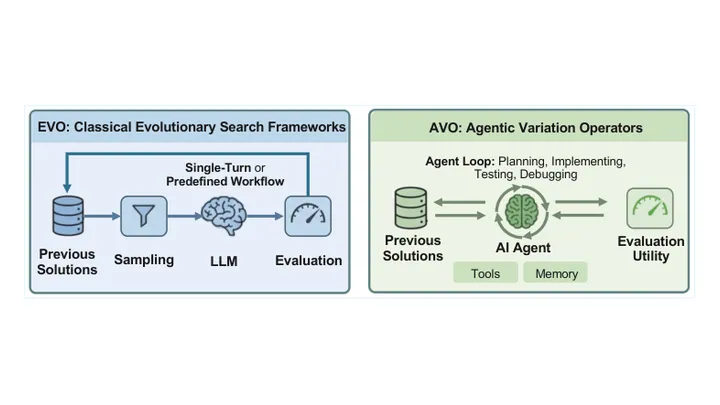
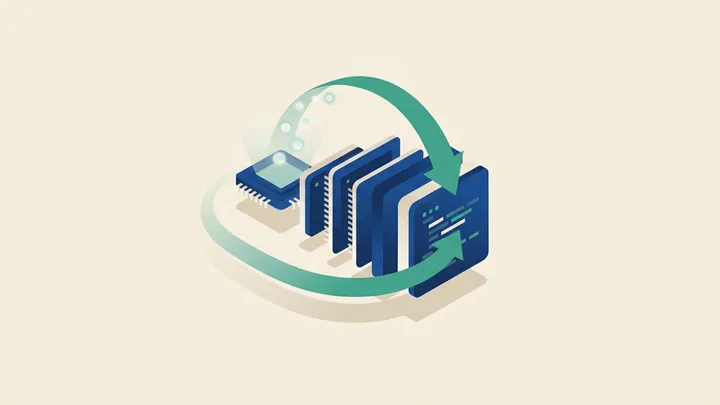
AVO: Agentic Variation Operators for Autonomous Evolutionary Search

The loop: Autonomous coding agents evolve and repair GPU kernels for attention. This improves the execution speed of the model architecture that the agents themselves rely on.

Autonomous coding agents replace fixed mutation operators in evolutionary search to discover highly optimized GPU kernels for attention.

loop fit 9/10Terry Chen, Zhifan Ye, Bing Xu, Zihao Ye, Timmy Liu, Ali Hassani, Tianqi Chen,...via arXiv
AVO: Agentic Variation Operators for Autonomous Evolutionary Search
PaperarXiv·19 Nov 2026·Tools and harness

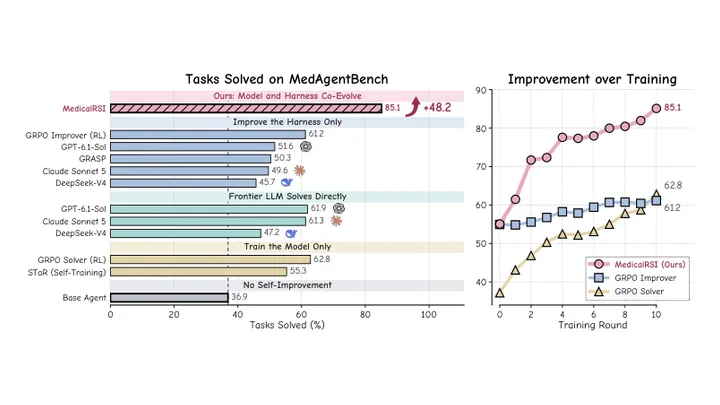
MedicalRSI: Medical Recursive Self-Improving Agents via Clinical Model-Harness Co-Evolution

The loop: An Improver agent writes a medical harness based on a Solver agent's failures. This improves the Solver's performance and provides a reward signal to make the Improver better at writing harnesses.

A recursive self-improvement framework uses one model as both a medical solver and an improver that learns to write better harnesses from the solver's failures.

loop fit 9/10Ziqing Wang, Hamid Palangi, Lili Zhao et al.via arXiv
MedicalRSI: Medical Recursive Self-Improving Agents via Clinical Model-Harness Co-Evolution
Blog postMETR·24 Nov 2026·Training data

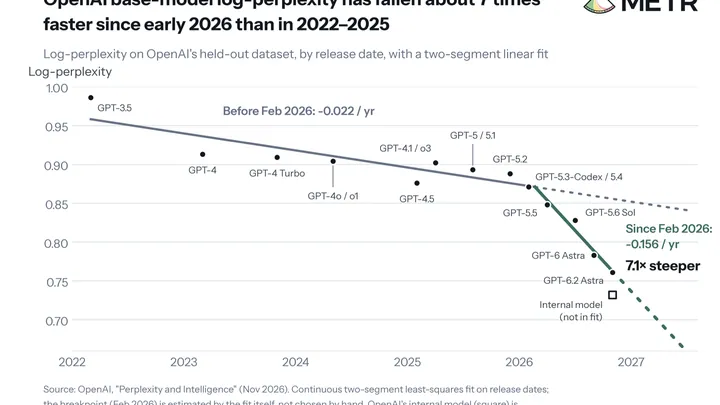
Interpreting a recent acceleration in pretraining loss

The loop: OpenAI uses its own codebase as a training dataset. As models contribute to this codebase, they improve the training data available for their successor models, accelerating the drop in pretraining loss.

OpenAI's pretraining loss has fallen dramatically since early 2026, potentially driven by the inclusion of AI-generated code in its training data.

loop fit 8/10via METR
Interpreting a recent acceleration in pretraining loss
Forum postLessWrong·24 Nov 2026·Interpretability and oversight

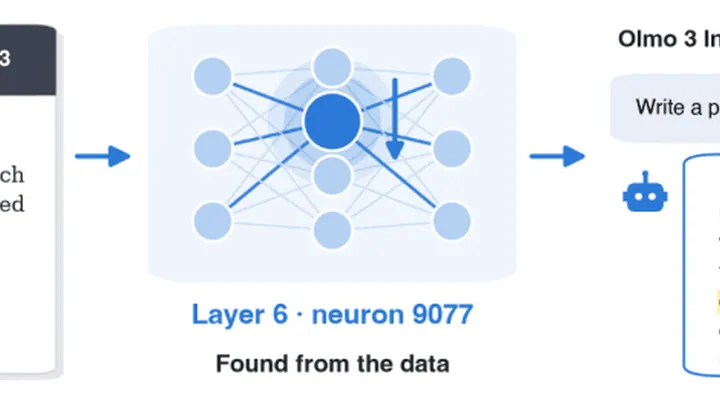
Weird Neurons Mimic Weird Data

The loop: A data-driven search identifies individual neurons linked to specific, rare pretraining data. This improves the understanding of model behaviors and aids in filtering training sets for successor models.

A data-driven approach finds individual writer neurons in language models that produce strange behaviors matching specific rare data from their pretraining.

loop fit 8/10Samantha Peasevia LessWrong
Weird Neurons Mimic Weird Data
NewsAlignment Forum·24 Nov 2026·Research automation

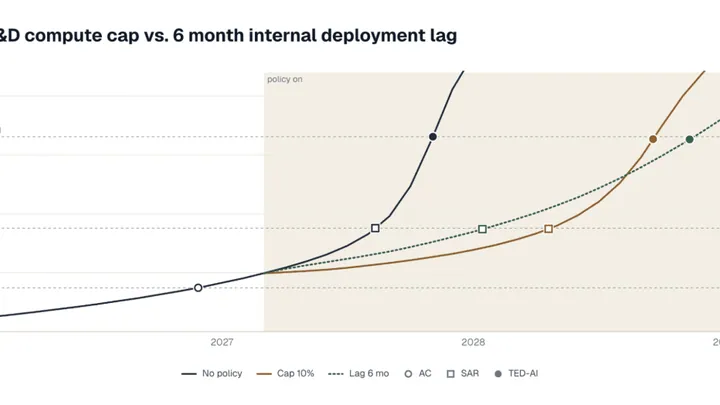
Comparing AI R&D compute caps and deployment lags

The loop: AI models are used to perform AI R&D, which improves successor models. These successor models are then used for further AI R&D, subject to deployment lags or compute caps.

An analysis compares AI R&D compute caps and deployment lags as policy mechanisms to pace the recursive self-improvement of AI systems.

loop fit 8/10eliflandvia Alignment Forum
Comparing AI R&D compute caps and deployment lags

← 24 Nov 2026 Latest