Alphabell.
Daily edition

Radar, 18 Nov 2026

Today's radar highlights a major milestone in direct self-modification, alongside practical loops in continuous integration optimization and kernel writing.

PaperarXiv·18 Nov 2026·Self-modifying agents

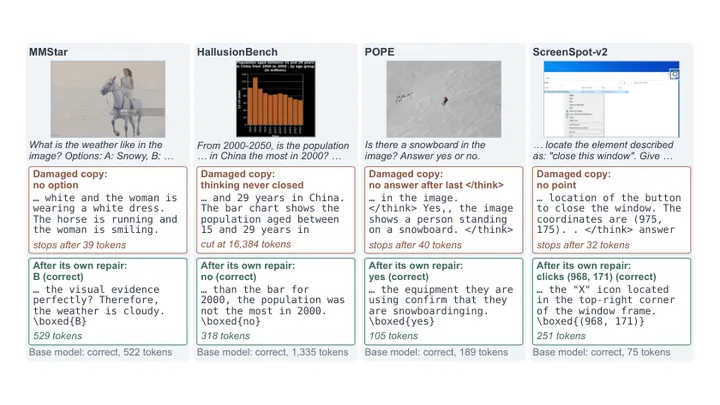
Language Models Can Rewrite Their Own Weights

The loop: A 27B language model diagnoses its own failures and directly edits its own weights without gradients or training. These edited weights are then used by the model to achieve higher accuracy on subsequent unseen problems.

A frontier model demonstrates the ability to reason about its own failures and directly rewrite its own weights to improve its accuracy on held-out tests.
loop fit 10/10Jiajun Fan, Neil He, Changyi Yang, Andy Mao, Xi Zhu, Chaoran Cheng, Kaiqu...via arXiv
Language Models Can Rewrite Their Own Weights
PaperarXiv·18 Nov 2026·Research automation

RSI-Prime: Training Models to Train Models

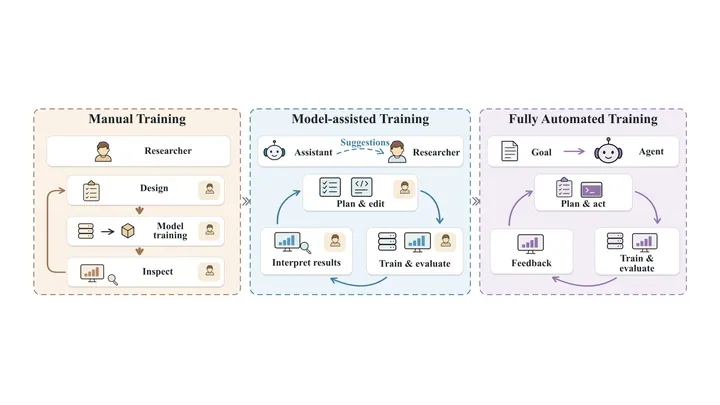
The loop: A GLM-5.3 model trains on a dataset of experimental trajectories to improve its ability to make high-quality model training decisions. This improved capability allows the model to autonomously conduct post-training and build better successor models.

A new dataset of experimental trajectories is used to train a language model to autonomously conduct model training and post-training tasks.

loop fit 9/10Dewu Zheng, Yang Ye, Hongyu Zhang, Jun Yu, Yanlin Wangvia arXiv
RSI-Prime: Training Models to Train Models
PaperarXiv·18 Nov 2026·Training data

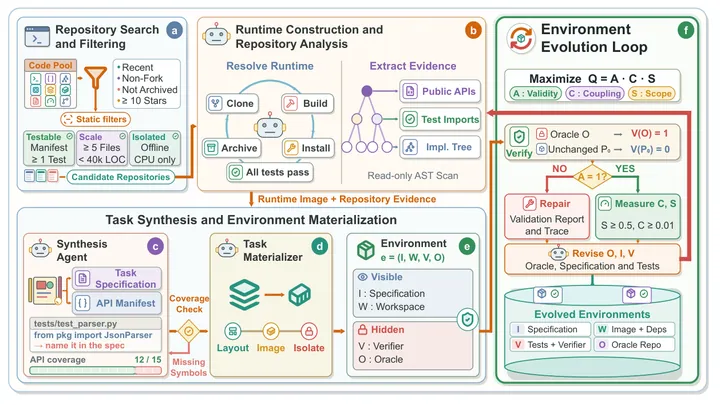
From Repositories to Training Environments: Scaling Long-Horizon Coding Agents with Environment Evolution Loop

The loop: The RepoFactory pipeline uses an environment evolution loop to optimize synthetic training environments based on proxy feedback. These improved environments are then used to train a successor coding model that is better at long-horizon tasks.

An automated pipeline converts real repositories into verifiable environments and iteratively optimizes them to train better long-horizon coding agents.

loop fit 9/10Yang Tian, Tianyu Zheng, Xiyuan Yang, Yaxin Du, Chengran Yang, Bo Zhao, Jian...via arXiv
From Repositories to Training Environments: Scaling Long-Horizon Coding Agents with Environment Evolution Loop
Articlestarsling.dev·17 Nov 2026·Tools and harness

Launch HN: StarSling (YC P25), Self-improving CI for agent-volume repos

The loop: StarSling AI agents analyze continuous integration workflows to generate and merge pull requests that resolve performance bottlenecks. These merged pull requests make the continuous integration harness faster and cheaper for all subsequent agent runs.

A startup launches fast GitHub Actions runners equipped with AI agents that continuously profile and optimize the continuous integration workflows they run on.

loop fit 8/10yonasbvia Hacker News
Launch HN: StarSling (YC P25), Self-improving CI for agent-volume repos
Blog postTogether AI·16 Nov 2026·Kernels and compilers

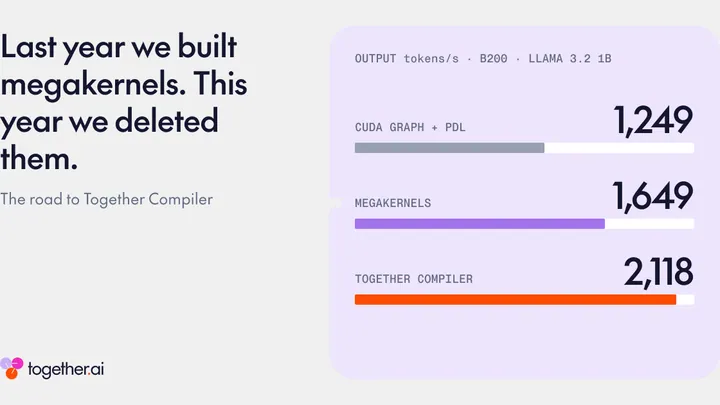
Last year we built megakernels. This year we deleted them: The road to Together Compiler

The loop: AI agents rewrite and fuse GPU kernels for a model's forward pass to optimize execution. These optimized kernels improve the inference speed of the models, which allows the agents themselves to run faster.

Together AI details how they used AI agents to rewrite and fuse GPU kernels, outperforming hand-written megakernels and accelerating model inference.

loop fit 7/10via Together AI
Last year we built megakernels. This year we deleted them: The road to Together Compiler
ProjectGitHub·14 Nov 2026·Tools and harness

oriliz/agent-crop

The loop: An AI programming assistant records its own local timing and performance data to audit its time usage. The assistant then uses this evidence to rewrite its own instructions and tools, improving its efficiency on future tasks.

An open-source tool provides a local timing and auditing harness for coding agents to track their performance and rewrite their own instructions.

loop fit 7/10orilizvia GitHub
oriliz/agent-crop

← 17 Nov 2026 Latest