Alphabell.
Daily edition

Radar, 31 Oct 2026

Today's edition highlights the growing focus on self-evolving agent harnesses and rigorous benchmarks for AI infrastructure development.

PaperarXiv·29 Oct 2026·AI R&D evals

InfraDev: Can Coding Agents Develop AI Infrastructure, and How Can We Tell?

The loop: Coding agents develop production-grade AI infrastructure like Megatron-LM and vLLM within the InfraDev benchmark. This improves the evaluation of infrastructure engineering, guiding the development of agents that can build and optimize their own training and inference systems.

A benchmark evaluating coding agents on real-world pull requests to AI infrastructure repositories like Megatron-LM and vLLM.
loop fit 10/10Zhonghao Jiang, Xuyang Zheng, Yanfu Yan et al.via arXiv
InfraDev: Can Coding Agents Develop AI Infrastructure, and How Can We Tell?
PaperarXiv·29 Oct 2026·Self-modifying agents

EvoIn: Bridging Evolution and Internalization for Agent Fine-Tuning

The loop: An agent temporarily instantiates evolved decision-making procedures in its harness to generate improved reasoning traces. The agent then fine-tunes on these traces, internalizing the logic to improve its own future decision-making without relying on the external harness.

An agent fine-tuning framework that evolves new decision-making procedures and internalizes them by training the model on its own rewritten reasoning traces.

loop fit 9/10Yunhang Shen, Zhangquan Chen, Xiaotian Li et al.via Hugging Face Papers
EvoIn: Bridging Evolution and Internalization for Agent Fine-Tuning
PaperarXiv·29 Oct 2026·Tools and harness

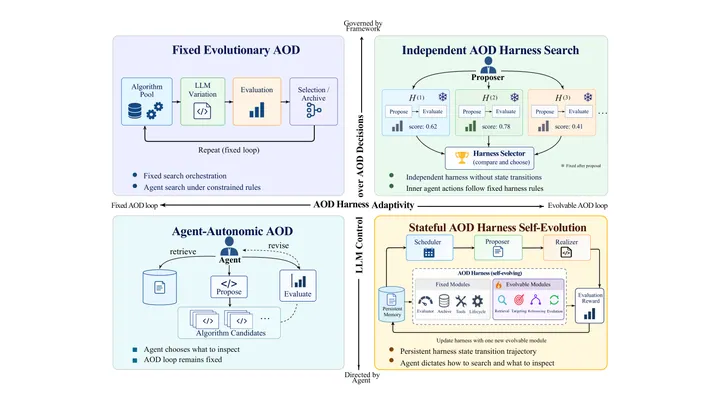
HEMO: Harness Self-Evolution for Multi-Objective Combinatorial Optimization

The loop: A large language model treats its own automatic operator design harness as a self-evolving target. By updating its retrieval, selection, and orchestration logic based on downstream performance, the system improves its ability to discover optimization operators.

A framework that allows an automatic operator design harness to self-evolve its own logic based on the performance of the operators it generates.

loop fit 9/10Jianghan Zhu, Cong Zhang, Ni Zhang et al.via arXiv
HEMO: Harness Self-Evolution for Multi-Objective Combinatorial Optimization
PaperarXiv·28 Oct 2026·Self-reward and self-play

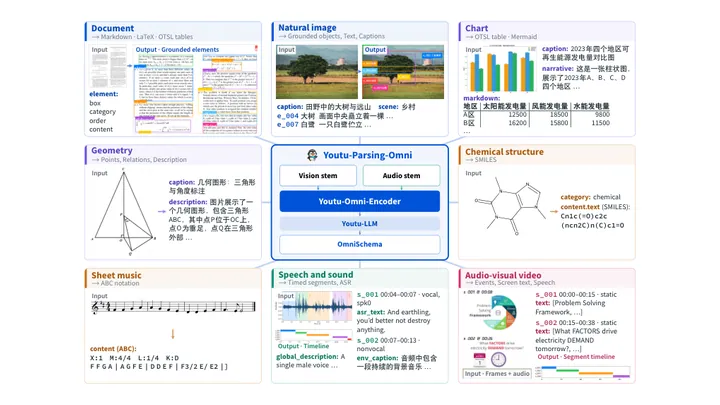
Youtu-Parsing-Omni: One Encoder, One Schema, All Modalities

The loop: The omni-modal parser generates its own rollouts against a reference-conditioned copy of itself to create token-level targets. The model is then trained on these rollouts and refreshes the reference copy with its updated weights, driving continuous self-improvement.

An omni-modal parser that unifies all modalities and tasks into a single schema, enabling self-evolving post-training through on-policy distillation.

loop fit 9/10Yecheng Wu, Song Han, Han Caivia Hugging Face Papers
Youtu-Parsing-Omni: One Encoder, One Schema, All Modalities
PaperarXiv·28 Oct 2026·Self-reward and self-play

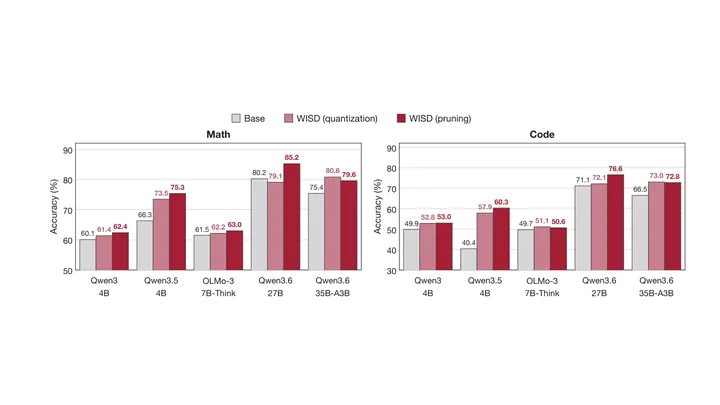
Weaken to Strengthen: Weakening-Induced On-Policy Self-Distillation for Large Reasoning Models

The loop: A reasoning model generates a weaker counterpart of itself through quantization or pruning to create a contrastive training signal. This enables on-policy self-distillation without privileged information, improving the original model's accuracy on reasoning tasks.

A self-distillation method that improves reasoning models by using a quantized or pruned version of the model as a weaker counterpart to generate training signals.

loop fit 9/10Miri Liu, Xiayu Zhao, Encheng Xie, ChengXiang Zhaivia arXiv
Weaken to Strengthen: Weakening-Induced On-Policy Self-Distillation for Large Reasoning Models
PaperarXiv·28 Oct 2026·AI R&D evals

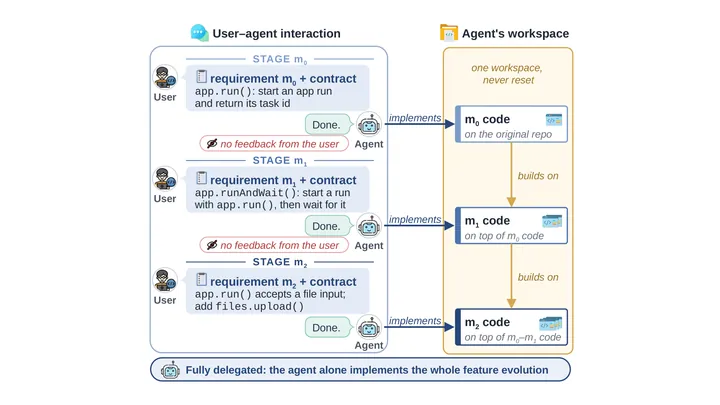
FeatureArc: Benchmarking Coding Agents on Evolving Features

The loop: Coding agents extend software features over successive stages and build on their own earlier code within the FeatureArc benchmark. This improves the evaluation of agentic self-maintenance, guiding the development of agents capable of long-term iterative software engineering.

A benchmark that evaluates coding agents on their ability to iteratively extend software features and maintain correctness across successive stages.

loop fit 9/10Yunlong Wang, Alyssa Wu, Cuiyun Gao, Jia Feng, Songyuanyi Lu, Zhichao Huvia arXiv
FeatureArc: Benchmarking Coding Agents on Evolving Features
PaperarXiv·28 Oct 2026·Self-modifying agents

InfRec-Cardinal/The-Trinity

The loop: Multimodal agents undertake capability-driven recursive self-improvement within The Trinity framework. By iteratively enhancing their own performance, the agents systematically expand their multimodal capabilities.

Official implementation of a framework for capability-driven recursive self-improvement in multimodal agents.

loop fit 7/10Hehai Lin, Qi Yang, Chengwei Qinvia arXiv
InfRec-Cardinal/The-Trinity
ProjectGitHub·26 Oct 2026·Self-modifying agents

InfRec-Cardinal/The-Trinity

The loop: Multimodal agents use capability-driven recursive self-improvement to enhance their own performance and capabilities.

Official implementation of The Trinity: Capability-Driven Recursive Self-Improvement for Multimodal Agents.

loop fit 7/10InfRec-Cardinalvia GitHub
InfRec-Cardinal/The-Trinity

← 30 Oct 2026 Latest