Alphabell.
Daily edition

Radar, 29 Oct 2026

Today's edition highlights the expanding scope of AI self-improvement, from agents researching game mechanics to models securing the infrastructure they run on.

PaperarXiv·28 Oct 2026·Research automation

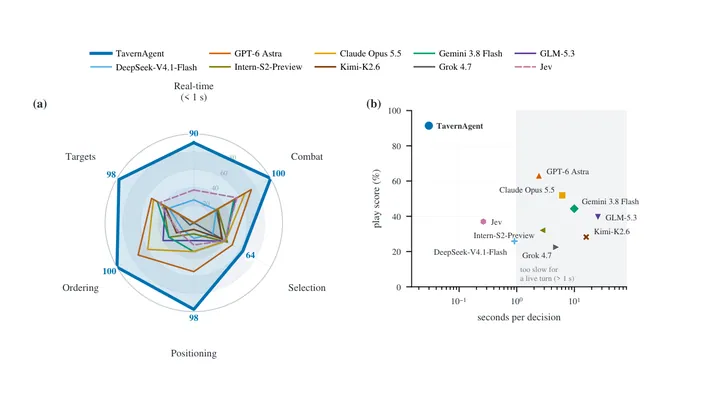
Build, Don't Play: Self-Improving LLM Research Agents Develop a Hearthstone Battlegrounds AI That Rivals Top Players

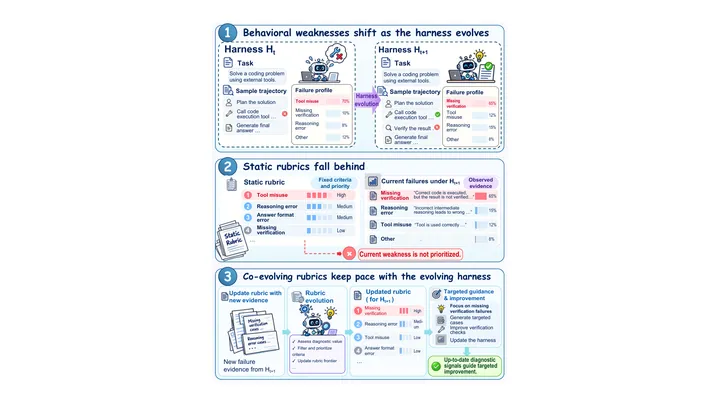
The loop: AutoTavern uses LLM research agents to build a game simulator and policy from live feedback, which improves their shared research memory and process, making the agents better at researching the game.

A multi-agent research system autonomously builds a simulator and trains a policy for Hearthstone Battlegrounds that reaches the top of the live ladder.
loop fit 9/10Johnny Yu, Cyril Gorllavia arXiv
Build, Don't Play: Self-Improving LLM Research Agents Develop a Hearthstone Battlegrounds AI That Rivals Top Players
PaperarXiv·27 Oct 2026·Training data

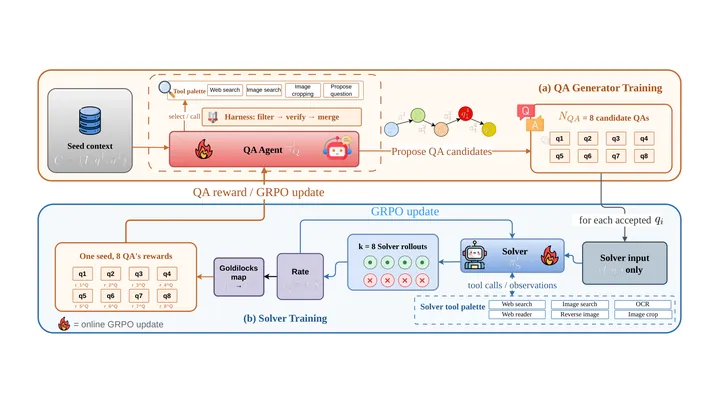
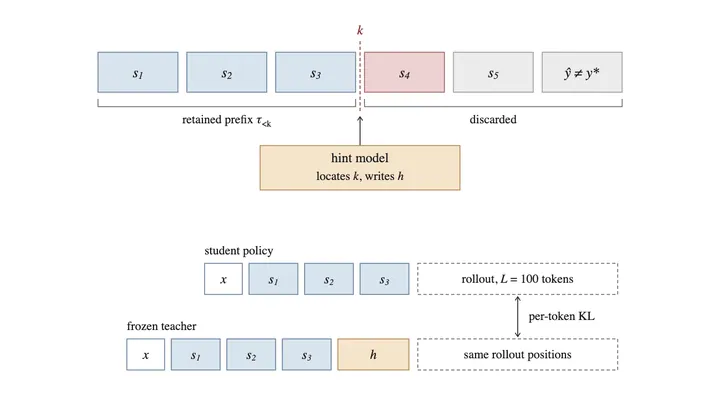
MTA-Zero: Self-Improving Multimodal Deep Search via Online QA-Solver Co-training

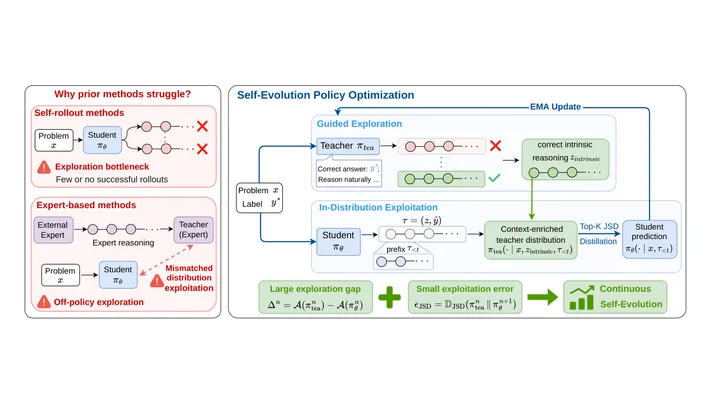
The loop: A QA Generator creates verified questions at the Solver's learning frontier, which improves the Solver's training data, while the Solver's performance rewards and improves the Generator.

An online co-training framework where a generator creates multi-hop questions to train a deep-search solver without relying on fixed offline corpora.

loop fit 9/10Hao Chen, Yukun Yan, Ziyu Han et al.via arXiv
MTA-Zero: Self-Improving Multimodal Deep Search via Online QA-Solver Co-training
PaperarXiv·25 Oct 2026·AI R&D evals

Change2Task: From Repository Changes to Executable Coding Agent Tasks and Environments

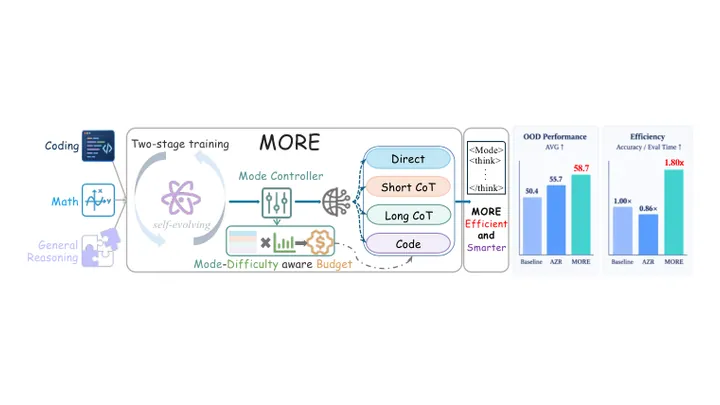
The loop: Change2Task converts historical pull requests into verified tasks, which provides executable data to train and evaluate the next generation of coding agents.

A system that mines repository history to automatically construct executable, verified tasks for training and benchmarking coding agents.

loop fit 9/10Wenhang Shi, Yiren Chen, Zhe Zhao et al.via arXiv
Change2Task: From Repository Changes to Executable Coding Agent Tasks and Environments
PaperarXiv·24 Oct 2026·Self-modifying agents

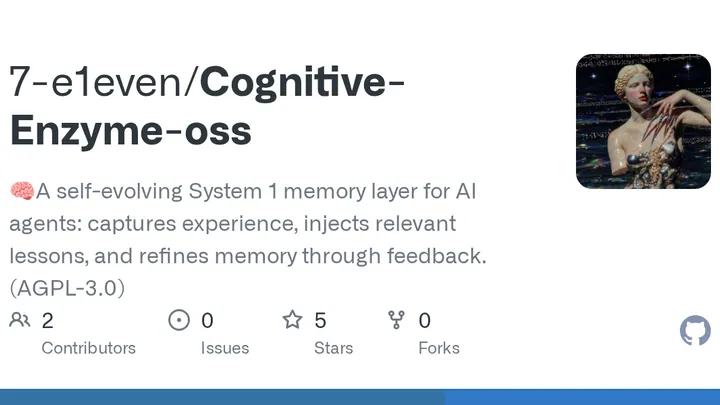
7-e1even/Cognitive-Enzyme-oss

The loop: Cognitive-Enzyme-oss captures agent experience and refines its memory layer through feedback, which injects relevant lessons back into the agent's context, making it better at future tasks.

An open-source memory layer that captures agent experience and refines it into reusable lessons.

loop fit 7/10Dianxing Shi, Dingjie Fu, Tianyu Lei et al.via arXiv
7-e1even/Cognitive-Enzyme-oss
PaperarXiv·27 Oct 2026·Hardware and chips

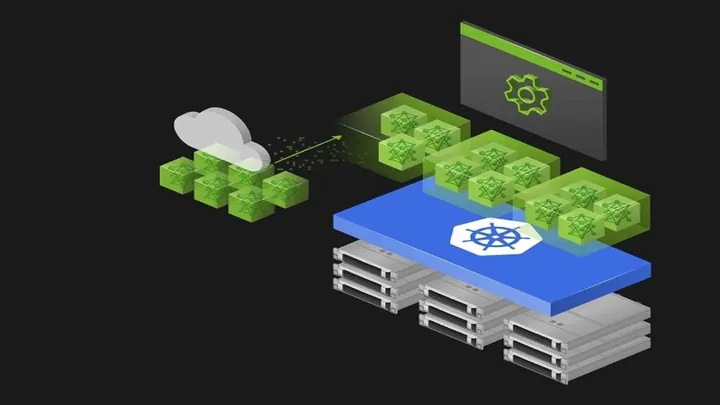
How NVIDIA Mission Control 2.5 Brings Autonomous Recovery to Kubernetes

The loop: NVIDIA Mission Control provides autonomous recovery for GPU clusters, which improves the reliability of the hardware infrastructure used to train future AI models.

An autonomous recovery system for Kubernetes that detects and resolves faults in large-scale GPU clusters.

loop fit 7/10Yujun Zhou, Zhenwen Liang, Haolin Liu, Wenhao Yu, Kishan Panaganti, Linfeng...via arXiv
How NVIDIA Mission Control 2.5 Brings Autonomous Recovery to Kubernetes
PaperarXiv·24 Oct 2026·Tools and harness

Discovering and exploiting vulnerabilities in critical, real-world software with Claude

The loop: Claude identifies critical vulnerabilities in operating systems and browsers, which allows developers to patch the infrastructure that Claude itself depends on to run securely.

Anthropic used an internal version of Claude to discover zero-day vulnerabilities and attack chains in widely used software.

loop fit 7/10Xiangyu Peng, Jiaxin Zhang, An Yan et al.via arXiv
Discovering and exploiting vulnerabilities in critical, real-world software with Claude
PaperarXiv·26 Oct 2026·Interpretability and oversight

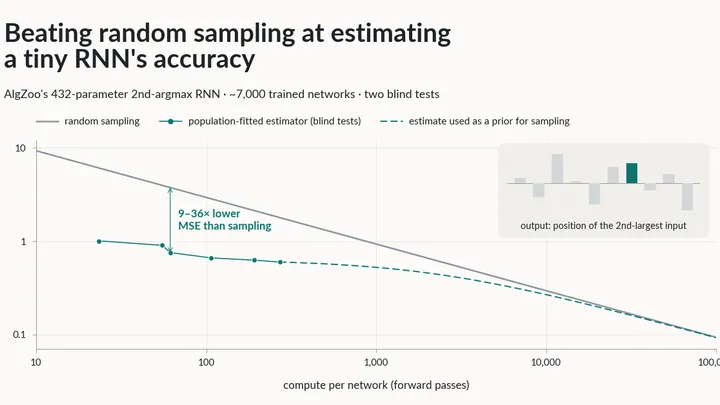
Brute-Force Progress on AlgZoo's 432-param Interpretability Challenge

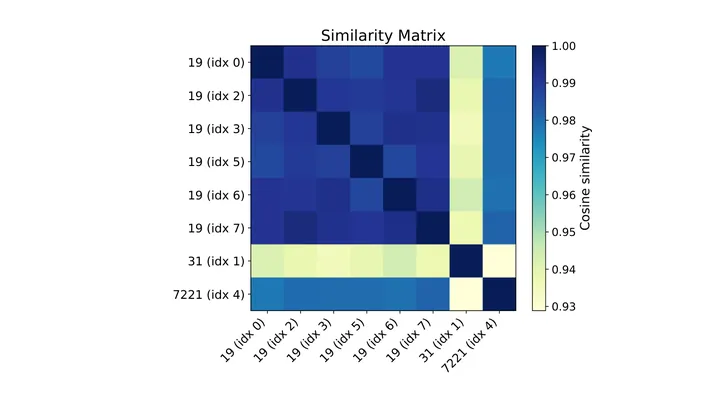
The loop: An estimator is trained to predict the accuracy of small RNNs, which provides a mechanistic interpretability signal that researchers can use to evaluate and improve future model architectures.

A community researcher trained an estimator to predict the accuracy of small RNNs as part of the AlgZoo interpretability challenge.

loop fit 6/10Yuan Xiong, Ziqi Miao, Qian Chen, Lijun Li, Ken Deng, Yequan Wang, Shizhu He,...via arXiv
Brute-Force Progress on AlgZoo's 432-param Interpretability Challenge
ProjectGitHub·23 Oct 2026·Self-modifying agents

7-e1even/Cognitive-Enzyme-oss

The loop: Cognitive-Enzyme-oss captures agent experience and refines its memory layer through feedback, which improves the agent's lessons, making the agent better at future tasks.

🧠A self-evolving System 1 memory layer for AI agents: captures experience, injects relevant lessons, and refines memory through feedback. (AGPL-3.0)

loop fit 7/107-e1evenvia GitHub
7-e1even/Cognitive-Enzyme-oss
Blog postNVIDIA·26 Oct 2026·Tools and harness

How NVIDIA Mission Control 2.5 Brings Autonomous Recovery to Kubernetes

The loop: NVIDIA Mission Control provides autonomous recovery for GPU clusters, which improves the reliability and efficiency of training large-scale AI models.

Training large-scale AI models on thousands of GPUs is a high-stakes operation where monitoring and automation must be built-in to optimize cluster resiliency...

loop fit 7/10Elizabeth Goodmanvia NVIDIA Technical Blog
How NVIDIA Mission Control 2.5 Brings Autonomous Recovery to Kubernetes
Blog postAnthropic·27 Oct 2026·Tools and harness

Discovering and exploiting vulnerabilities in critical, real-world software with Claude

The loop: Claude identifies critical vulnerabilities in operating systems and browsers, which allows developers to patch the infrastructure that Claude itself depends on to run securely.

Over the past few months, we’ve used an unreleased, internal research model to find critical vulnerabilities in some of the world’s most widely used software, such as browsers and operating systems. In this post, we share details of five...

loop fit 7/10via Anthropic
Discovering and exploiting vulnerabilities in critical, real-world software with Claude
Forum postLessWrong·26 Oct 2026·Interpretability and oversight

Brute-Force Progress on AlgZoo's 432-param Interpretability Challenge

The loop: An estimator is trained to predict the accuracy of small RNNs, providing a mechanistic interpretability signal that can be used to evaluate model performance.

Nick Cammarata's recent article made me want to take a serious stab at interpretability myself. After a bit of consideration, I decided to work on the AlgZoo challenge that was posted here earlier. I trained an estimator on models with...

loop fit 6/10Josh Snidervia LessWrong
Brute-Force Progress on AlgZoo's 432-param Interpretability Challenge

← 28 Oct 2026 Latest