Alphabell.
Daily edition

Radar, 27 Oct 2026

Today's edition highlights the growing trend of AI agents modifying their own runtime environments and harnesses, moving beyond simple prompt tuning to structural self-improvement.

PaperarXiv·26 Oct 2026·Research automation

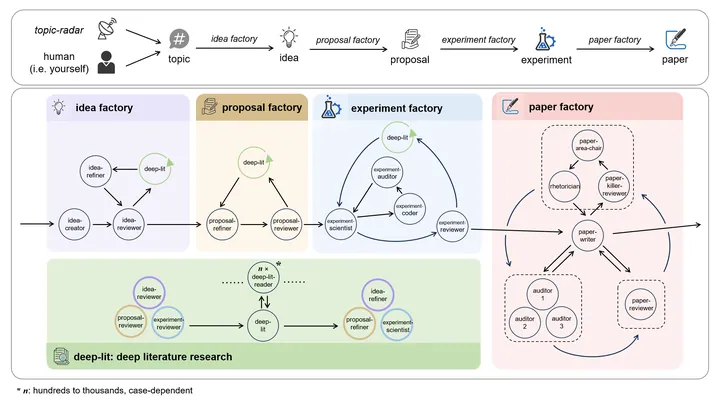
Infinity Machine: a self-improving AI agent for research

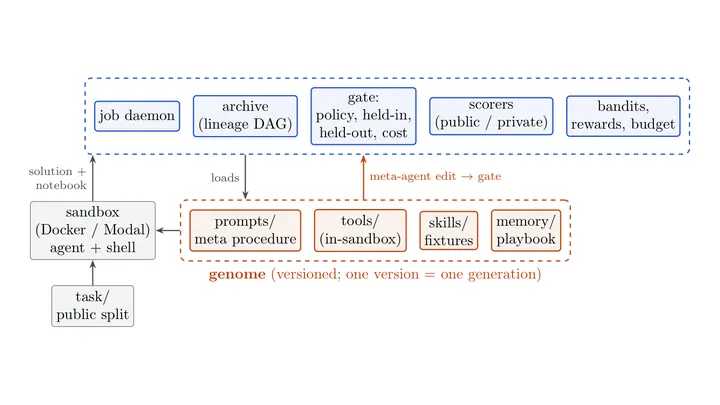
The loop: An AI agent modifies its own harness, prompts, and meta agent to solve and verify open scientific problems. These modifications pass through a kernel-enforced gate and are directly used by the agent to conduct further autonomous research.

A self-improving research agent that autonomously modifies its own harness to solve and verify open problems in quantum information.
loop fit 10/10Harish Santhanalakshmi Ganesanvia arXiv
Infinity Machine: a self-improving AI agent for research
PaperarXiv·25 Oct 2026·AI R&D evals

ParetoRSI-Gym: Can AI Agents Improve Language Models Across Multiple Domains?

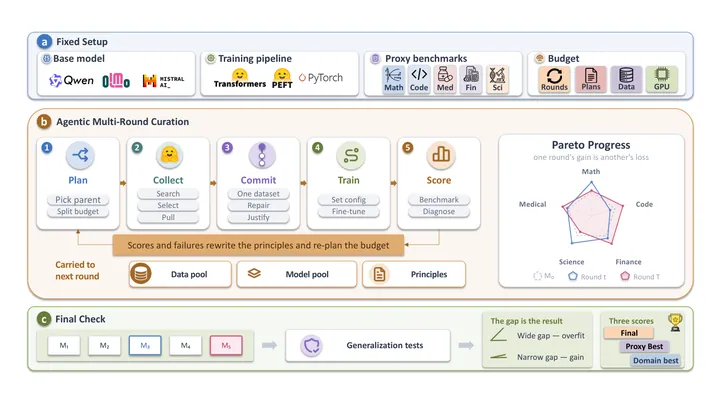
The loop: An agent searches for and curates training data to post-train its own successor across multiple domains. The resulting model is evaluated on generalization benchmarks, and the results guide the agent in the next round of data selection.

A multi-domain benchmark for evaluating recursive self-improvement where an agent searches for and curates data to post-train its successor.

loop fit 9/10Haojin Wang, Yangzhen Wu, Zeyi Chen et al.via arXiv
ParetoRSI-Gym: Can AI Agents Improve Language Models Across Multiple Domains?
PaperarXiv·22 Oct 2026·Tools and harness

Reproducible Evaluation as the Substrate for Safe Prompt Compression in Production Agents

The loop: An offline evaluation harness drives GEPA-based prompt optimization for a production conversational agent. The resulting compressed prompt is deployed back to the agent, shrinking its prompt surface while maintaining or improving task correctness.

A reproducible offline evaluation harness enables safe, automated prompt compression for production conversational agents without regressing performance.

loop fit 9/10Prabal Vashisht, Zheng Hu, Ying Yangvia arXiv
Reproducible Evaluation as the Substrate for Safe Prompt Compression in Production Agents
PaperarXiv·23 Oct 2026·Training data

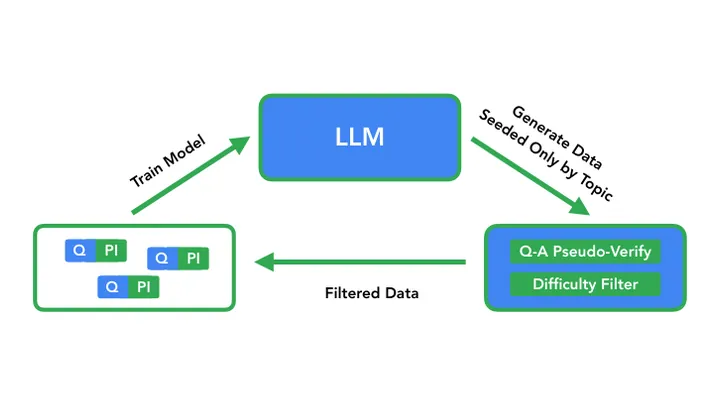
On-Policy Self-Training: Data-Free Self-Improvement in Large Language Models

The loop: A foundation model synthesizes its own curriculum of queries and privileged reasoning traces guided only by high-level topic descriptions. These synthetic traces are used for on-policy self-distillation, improving the model's performance across multiple domains.

A data-free self-training framework where a foundation model generates its own queries and reasoning traces for self-distillation.

loop fit 9/10Leon Sick, Lukas Hoyer, Yannick Strümpler et al.via arXiv
On-Policy Self-Training: Data-Free Self-Improvement in Large Language Models
PaperarXiv·Tools and harness

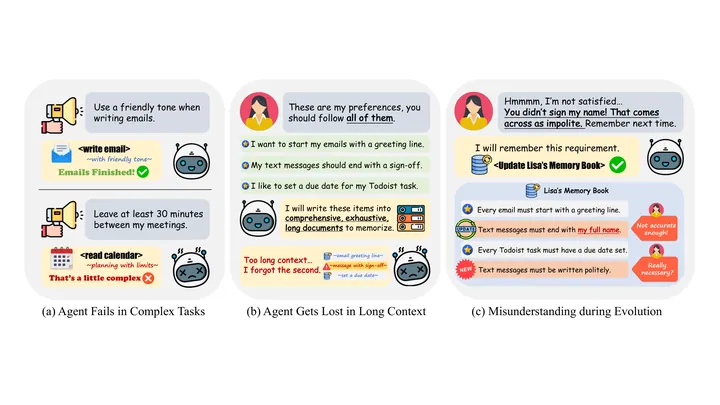
Harness Evolution as Learning: Approximation, Generalization, and Optimization Limits of Self-Improving Personal Agents

The loop: Personal agents evolve their own harnesses to optimize performance on tasks. The evolved harness is then deployed as the runtime environment for the agents, improving their execution of future tasks.

A study on personal agents that treat the evolution of their own harnesses as a learning mechanism to optimize future task execution.

loop fit 8/10via Awesome-AI4AI
Harness Evolution as Learning: Approximation, Generalization, and Optimization Limits of Self-Improving Personal Agents
Blog postNVIDIA·26 Oct 2026·Hardware and chips

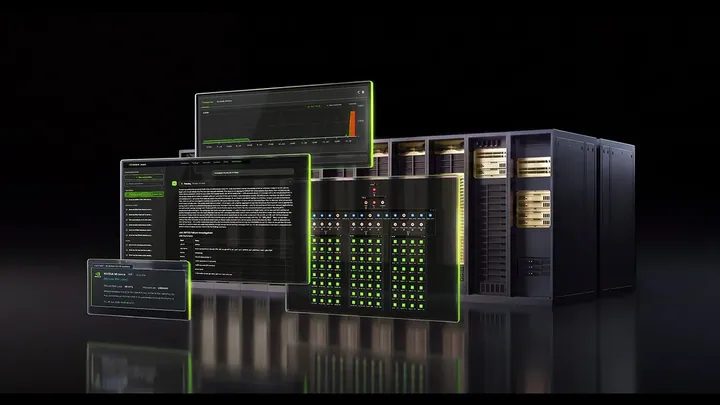
How NVIDIA Minerva Turns Telemetry Chaos Into Peak GPU Yield

The loop: AI models analyze telemetry to optimize GPU yield and cluster resiliency in AI factories. This optimization improves the hardware infrastructure that trains and runs those same AI models.

NVIDIA uses AI to analyze telemetry and optimize GPU yield in large-scale AI factories.

loop fit 7/10Elizabeth Goodmanvia NVIDIA Technical Blog
How NVIDIA Minerva Turns Telemetry Chaos Into Peak GPU Yield
Blog postOpenAI·26 Oct 2026·Tools and harness

How Ultrafast cut incident investigation from hours to minutes at OpenAI

The loop: Codex Ultrafast helps engineers investigate incidents and refactor code. This accelerates the development and security analysis of the underlying AI systems, including Codex itself.

OpenAI engineers use Codex Ultrafast to accelerate incident investigation and code refactoring.

loop fit 6/10via OpenAI
How Ultrafast cut incident investigation from hours to minutes at OpenAI

← 26 Oct 2026 Latest