Alphabell.
Daily edition

Radar, 5 Nov 2026

Today's edition highlights systems that continuously adapt to their own failures, from co-evolving training data to agentic compilation and harness patching.

PaperarXiv·5 Nov 2026·Training data

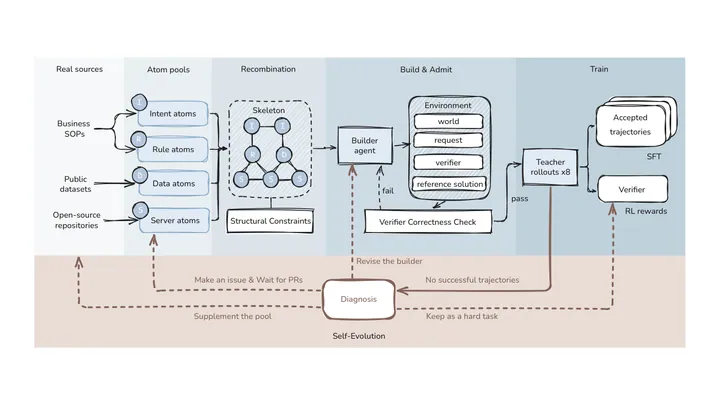
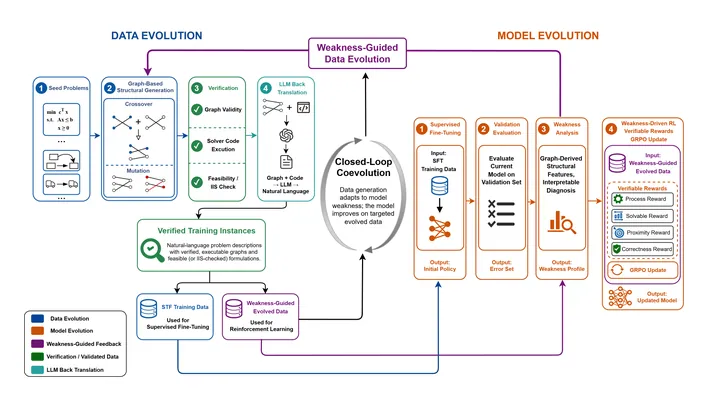
EvoOptiGraph: Weakness-Driven Coevolution via Graph-Based Structural Generation for Optimization Modeling

The loop: The model identifies its own weaknesses to guide the generation of structurally diverse training instances. These new instances are then used in a reinforcement learning stage to update the model's own weights.

A framework that co-evolves a language model and its training data by using the model's failure signals to generate new mixed-integer linear programming instances.

loop fit 10/10Qingcan Kang, Mingyang Liu, Xiaojin Fu, Shixiong Kai, Tao Zhong, Mingxuan Yuanvia arXiv
EvoOptiGraph: Weakness-Driven Coevolution via Graph-Based Structural Generation for Optimization Modeling
PaperarXiv·2 Nov 2026·Inference efficiency

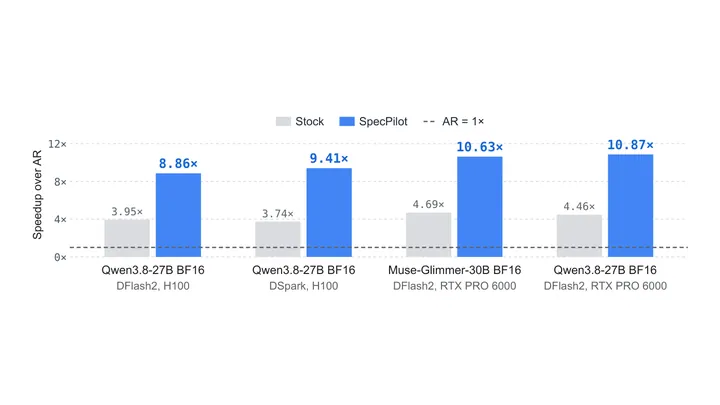
SpecPilot: Autonomous Algorithm Discovery and Systems Optimization for Speculative Decoding

The loop: Parallel agents explore algorithm and system optimizations for speculative decoding deployments. Successful optimizations are integrated to accelerate the target model's own inference.

An autonomous agentic loop that discovers and integrates deployment-specific algorithm and system optimizations for speculative decoding.

loop fit 9/10Kunjun Li, Wenhao Chai, Yihao Liang et al.via Hugging Face Papers
SpecPilot: Autonomous Algorithm Discovery and Systems Optimization for Speculative Decoding
PaperarXiv·4 Nov 2026·Tools and harness

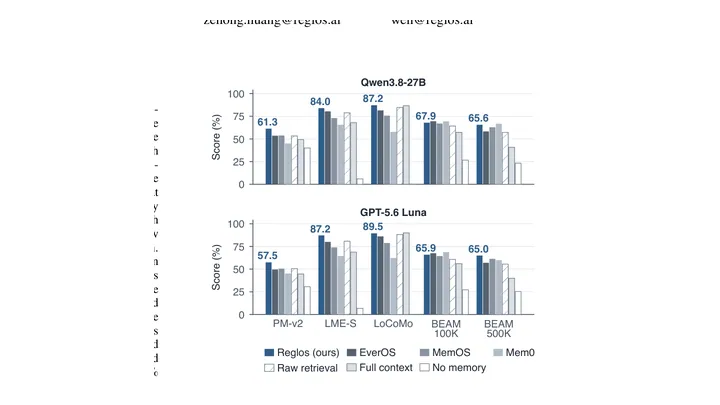
Reglos: A Self-Evolving Personal Memory Agent with Recursive Self-Improvement

The loop: A coding agent proposes patches to its own memory harness based on failure traces, while a critic screens them for benchmark gaming. Accepted patches permanently update the harness, improving the agent's performance on future conversations.

A personal memory agent that recursively improves its own memory harness by proposing and screening code patches from failure traces.

loop fit 9/10Sen Yang, Jiaduo Lin, Zehong Huang et al.via arXiv
Reglos: A Self-Evolving Personal Memory Agent with Recursive Self-Improvement
PaperarXiv·5 Nov 2026·Architecture and optimizer search

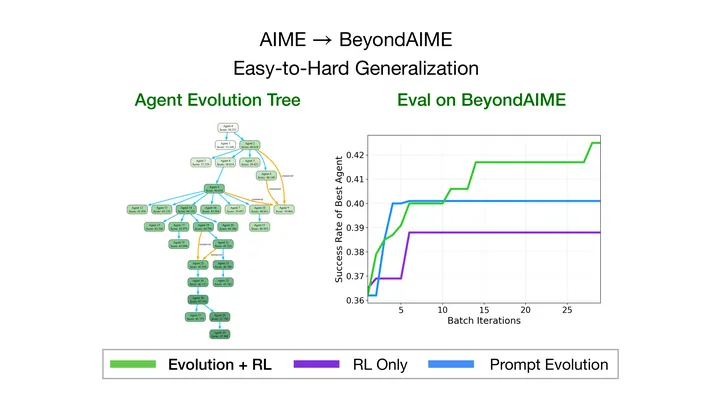
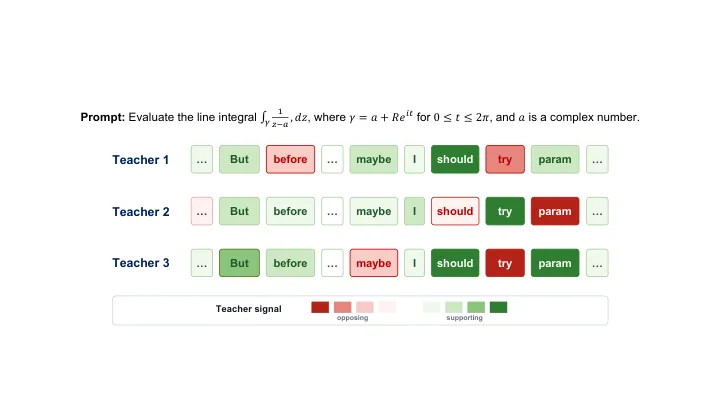
Evolutionary System Prompt Learning for Reinforcement Learning in LLMs

The loop: The language model samples trajectories under multiple system prompts, using them to update its weights via reinforcement learning and evolve its system prompts via self-reflection. Both the updated weights and the evolved prompts are then used by the model in the next iteration.

A method that jointly improves a model's weights through reinforcement learning and its experiential context through system prompt evolution.

loop fit 9/10Lunjun Zhang, Ryan Chen, Bradly C. Stadievia arXiv
Evolutionary System Prompt Learning for Reinforcement Learning in LLMs
PaperarXiv·4 Nov 2026·AI R&D evals

From AutoResearch to Continual AutoResearch: Do Agents Learn Across Tasks?

The loop: Research agents retain insights and persistent state across multiple machine learning tasks. This memory allows them to apply prior discoveries to new problems, improving their own research efficiency and solution quality over time.

An open-ended environment that evaluates whether autonomous research agents can retain and apply prior insights across a stream of machine learning tasks.

loop fit 9/10Jeremy Qin, Ruizhi Deng, Mohamed Osama Ahmed, Frederick Tung, Leo Fengvia arXiv
From AutoResearch to Continual AutoResearch: Do Agents Learn Across Tasks?
Blog postTogether AI·4 Nov 2026·Kernels and compilers

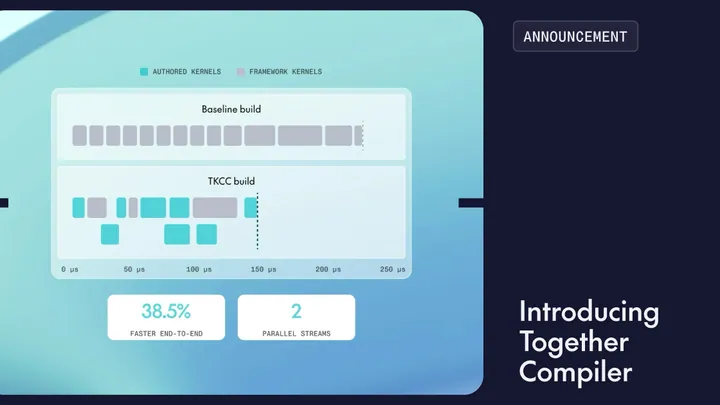
Together Compiler: Continual Compilation for AI inference

The loop: AI agents continuously optimize inference kernels for open models based on changing traffic. The resulting compiled kernels are then deployed to run those same models with higher throughput.

A continual compilation system that uses AI agents to optimize open models for inference in under 24 hours.

loop fit 8/10via Together AI
Together Compiler: Continual Compilation for AI inference
Blog postNVIDIA·4 Nov 2026·Tools and harness

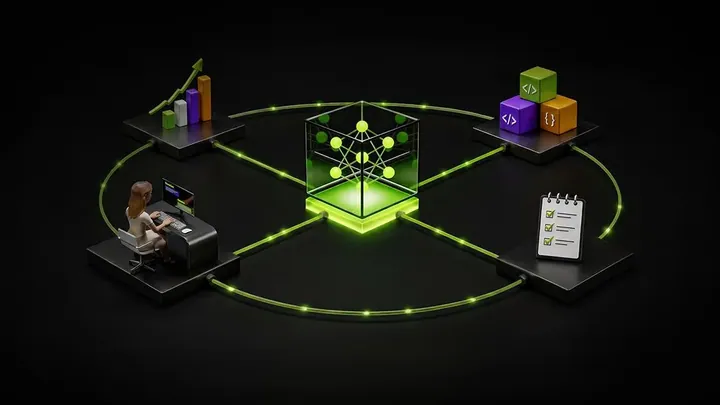
Use NVIDIA NeMo to Turn Agent Failures into Tests and Harness Fixes

The loop: Agents analyze their own production failures to generate custom evaluations and propose harness fixes. These fixes are then applied to improve the agent's prompts, memory, and execution code.

A workflow for using NVIDIA NeMo to automatically turn production agent failures into custom evaluations and harness improvements.

loop fit 8/10Patrick Moorheadvia NVIDIA Technical Blog
Use NVIDIA NeMo to Turn Agent Failures into Tests and Harness Fixes

← 4 Nov 2026 Latest