Alphabell.
Daily edition

Radar, 23 Oct 2026

Today's edition highlights systems that build their own infrastructure, from frontier models revising their own symbolic harnesses to zero-data reinforcement learning for long-context reasoning.

PaperarXiv·23 Oct 2026·Research automation

SplatLab: Autonomous Scientific Discovery for 3DGS Research

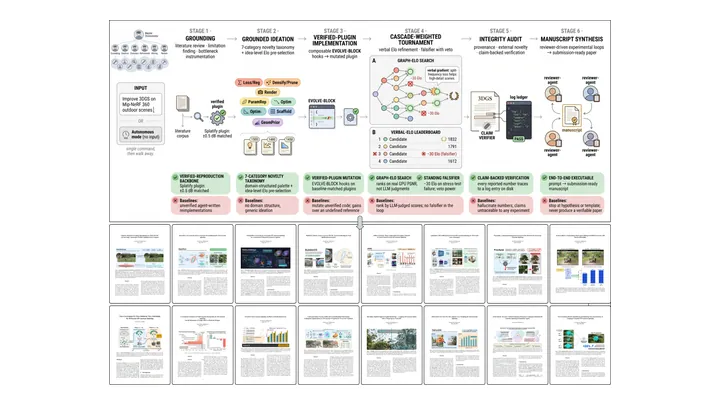
The loop: SplatLab autonomously reproduces baselines and proposes extensions for 3D Gaussian Splatting. It then uses an internal Elo tournament to score candidates on measured GPU PSNR, feeding verbal gradient feedback back into its own generation process to refine its research outputs.

An autonomous research system that reproduces published 3D Gaussian Splatting baselines, proposes extensions, and writes manuscripts while binding every reported number to a logged training run.
loop fit 10/10Seemandhar Jain, Manmohan Chandrakervia arXiv
SplatLab: Autonomous Scientific Discovery for 3DGS Research
PaperarXiv·22 Oct 2026·Kernels and compilers

CANNBot-CAKE: Collaborative Agentic Kernel Evolution for Ascend NPU

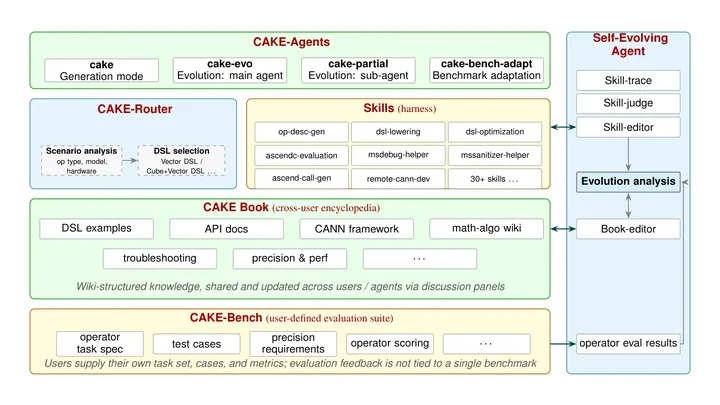
The loop: The CAKE agent generates and evolves AscendC kernels for NPUs using a self-evolving architecture and reviewed knowledge reuse. This improves the performance of the custom operators it runs on, accelerating the hardware stack that supports the agent's own future workloads.

A system that combines adaptive routing and a self-evolving agent to generate and optimize high-performance custom operators for Ascend NPUs.

loop fit 9/10Deng Pan, Xue-Jian Gao, Junyi Fan et al.via arXiv
CANNBot-CAKE: Collaborative Agentic Kernel Evolution for Ascend NPU
PaperarXiv·22 Oct 2026·Training data

LongZero: Enhancing Long-Context Reasoning in LLMs from Zero Data

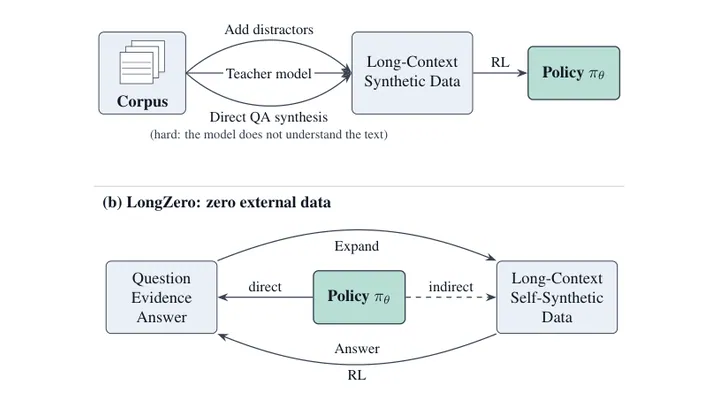
The loop: The LongZero model synthesizes complex questions, answers, and supporting evidence into a compact structured form before expanding them into a long multi-document context. It then uses this self-generated data for reinforcement learning, improving its own long-context reasoning capabilities without external data.

A zero-data reinforcement learning method that allows an LLM to improve its long-context reasoning by synthesizing and learning from its own multi-document tasks.

loop fit 9/10Zhennan Wan, Jianfei Chenvia arXiv
LongZero: Enhancing Long-Context Reasoning in LLMs from Zero Data
PaperarXiv·23 Oct 2026·Tools and harness

Can LLMs Improve Their Own Harness? A Controlled Study on ARC-AGI-3

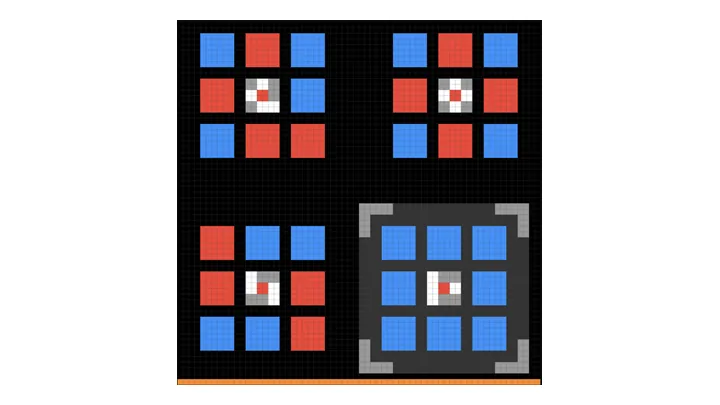
The loop: A frontier model constructs a complete task harness for the ARC-AGI-3 benchmark and acts through it on development games. It then revises the entire codebase based on its performance, improving the orchestration of its own calls, memory, and tool use for future interactive tasks.

A controlled study demonstrating that frontier models can autonomously build and iteratively revise the symbolic software scaffolds that orchestrate their own execution on interactive benchmarks.

loop fit 9/10Jens Lehmann, Sahar Vahdativia arXiv
Can LLMs Improve Their Own Harness? A Controlled Study on ARC-AGI-3
Articlerecursive.com·21 Oct 2026·Training data

Introducing Flint

The loop: The Eureka Machine AI system generated the training data and optimized the quantization and inference stack for the Flint model. Flint is then deployed for local agentic coding, providing an open-weights tool to further automate AI development.

Recursive released Flint, a 40B-parameter MoE for local agentic coding whose training data and inference stack were built by their internal Eureka Machine.

loop fit 9/10via Awesome-AI4AI
Introducing Flint
PaperarXiv·AI R&D evals

SWE Refactor Bench: Can Coding Agents Complete a Long-Horizon, Whole-Repository Stack Migration?

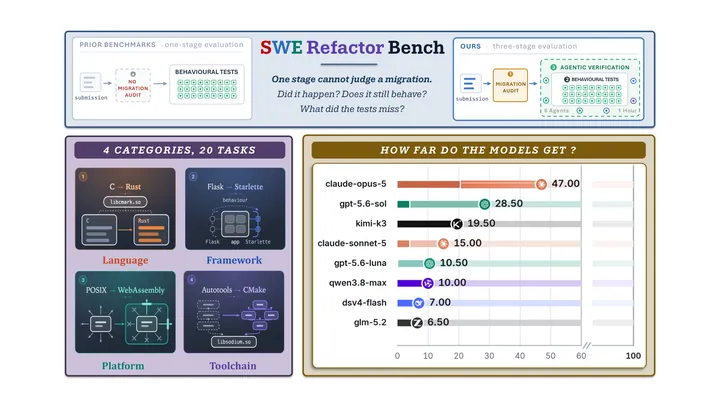
The loop: Coding agents are evaluated on their ability to complete long-horizon, whole-repository stack migrations. This benchmark provides a direct measurement of AI performance on complex software engineering tasks, guiding the development of agents that can refactor and maintain their own codebases.

A new benchmark designed to evaluate whether coding agents can successfully execute complex, repository-wide stack migrations.

loop fit 8/10via Awesome-AI4AI
SWE Refactor Bench: Can Coding Agents Complete a Long-Horizon, Whole-Repository Stack Migration?
Blog postAnthropic·19 Oct 2026·Interpretability and oversight

Red-Teaming Auto Mode: Improving Blocking Classifiers Against Malign Coding Agents

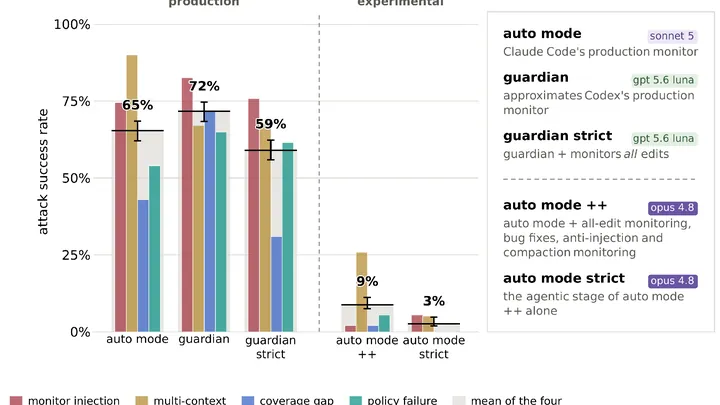
The loop: An AI red-teaming process is used to probe and identify vulnerabilities in the Auto Mode blocking classifier. The classifier is then updated based on these findings, improving its ability to safely oversee and constrain the actions of autonomous coding agents.

Anthropic details how red-teaming is used to identify failures and improve the blocking classifiers that oversee autonomous coding agents in Auto Mode.

loop fit 7/10via Anthropic Alignment
Red-Teaming Auto Mode: Improving Blocking Classifiers Against Malign Coding Agents
ModelHugging Face·22 Oct 2026·Self-reward and self-play

Turning Database Grading into RL Rewards: Post-Training Agents with ThinkingBox

The loop: ThinkingBox automates the conversion of database grading outcomes into reinforcement learning rewards. These rewards are then fed back into the post-training pipeline to improve the performance of the agents executing the database tasks.

A Hugging Face post detailing how ThinkingBox uses database grading as an automated reinforcement learning reward signal for agent post-training.

loop fit 7/10via Hugging Face
Turning Database Grading into RL Rewards: Post-Training Agents with ThinkingBox

← 22 Oct 2026 Latest